Lucknow: Uttar Pradesh’s ambitious cow conservation and rural sustainability mission is set to receive a major technological boost with the support of the Indian Institute of Technology (IIT) Delhi. Under the guidance of Chief Minister Yogi Adityanath, IIT Delhi’s experts will provide technical assistance for the large-scale installation of biogas plants across the state, paving the way for the development of a model village in every district.

The initiative is aimed at transforming rural Uttar Pradesh through sustainable energy, natural farming, and efficient utilization of cattle waste. Officials believe the project will significantly strengthen the state’s vision of promoting cow welfare while creating self-reliant villages powered by renewable energy.
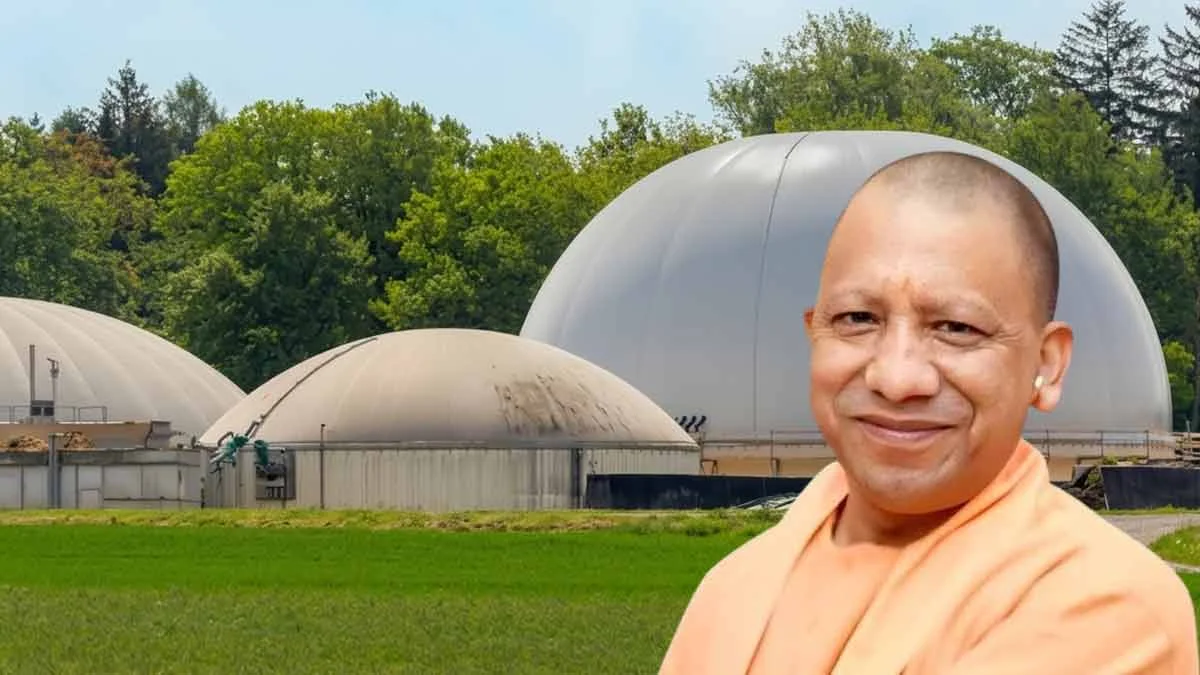
As part of the first phase, 18 biogas plants have already been installed in Palinda village of Jhansi district following the Chief Minister’s directives. The village is being developed as a Natural Farming Village, where every household is expected to have access to biogas for clean cooking fuel. The project is designed to demonstrate how cattle waste can be converted into a valuable source of energy while supporting environmentally friendly agricultural practices.
The technical initiative is being spearheaded by Professor Virendra Kumar Vijay of IIT Delhi’s Biogas Development and Training Centre. He is leading a team comprising Ratnesh Tiwari, Akshay Srivastava, Chintan Dave, and Dr. Mangaram, who will provide technical guidance for the installation, maintenance, and operation of biogas plants in villages across Uttar Pradesh.

According to the Uttar Pradesh Cow Service Commission, the widespread adoption of biogas technology will significantly reduce dependence on chemical fertilizers. The slurry generated from biogas plants will serve as high-quality organic manure, enabling farmers to adopt natural farming methods while improving soil fertility and reducing cultivation costs.
Chairman of the Uttar Pradesh Cow Service Commission, Shyam Bihari Gupta, said the initiative would help ensure the availability of chemical-free agricultural produce in the market while promoting sustainable farming practices. He noted that the model would benefit farmers economically, improve environmental health, and strengthen rural livelihoods.
The state government plans to replicate the Palinda model across all districts, with IIT Delhi providing continuous technical support for scaling up the programme. Besides enhancing energy security in rural areas, the initiative is expected to contribute to cleaner villages, healthier farming communities, and greater self-reliance.
The collaboration between the Uttar Pradesh government and IIT Delhi marks a significant step towards integrating scientific expertise with rural development. By combining renewable energy, organic agriculture, and cow conservation, the state aims to create a replicable model of sustainable village development that could serve as a benchmark for other regions of the country.